Building a Medieval Cathedral
The Cathedral you are in today was built around 800 years ago at a time of great change in Ireland. A new wave of settlers, called the Anglo-Normans, established themselves as the new ruling elite. They were excellent stonemasons and developed Saint Patrick’s church into an impressive Gothic-style cathedral. Construction began in 1220 and the Cathedral was consecrated on Saint Patrick’s Day in 1254.
The building works were overseen by Archbishop Luke. Tragically, he never saw the fruits of his labour as he had become blind before construction was completed. In about 1270, the Lady Chapel was added as an extension to the medieval building.
Built with a mixture of local limestone and stone imported from Bristol, the basic fabric of the building remains much the same today. The interior, however, has been greatly altered with each generation of worshippers making an impact on the building.
Construction: Artists depiction of the construction of the Cathedral in the 13th century, taken from the illustrations created in 1865 to mark the reopening of the Cathedral following extensive restoration works. Image courtesy of the Guinness Archive.
Dublin circa 1275: Saint Patricks Cathedral was built outside the defensive stone walls of the city. Our close neighbour, Christ Church Cathedral, can be seen within the walls. The fortified structure to the left is Dublin Castle, the administrative heart of the city. Image from ‘Dublin, The Story of a City’, courtesy of Stephen Conlin and The O Brien Press.
Your visit continues a story of pilgrimage to this site which has occurred for over 800 years.
The Life of a Medieval Cathedral
The church played a vital role in medieval life. As the largest building in Ireland, the Cathedral was built to inspire awe and wonder in all who saw it. Unlike the open plan Cathedral we see today, the building made use of a variety of smaller spaces thanks to internal divisions. This allowed for a more practical use of the space. These divisions remained in place until the 1860s.
The south arm (or transept) of the Cathedral was the Chapter House.
This was the administrative centre of the Cathedral and a place of learning. The north arm was a completely separate parish church, known as the Church of Saint Nicholas Without. The choir space of the Cathedral extended further into the nave and was divided from the rest of the building by a choir screen.
The wooden medieval chest on display here was used to protect vestments (robes), silver, and important documents from loss, theft or being eaten by rodents. It is decorated with carvings of mythological creatures, a stallion and a goat.
A Cathedral Canon: An artist’s impression of a medieval canon (priest) at Saint Patrick’s Cathedral. A canon is a member of a cathedral’s chapter (governing body), who are responsible for the administration of a cathedral. He is wearing a purple maniple on his left arm, indicating that he is on his way to Mass. Image from ‘Dublin. The Story of a City’ courtesy of Stephen Conlin and The O’Brien Press.
The Cathedral’s Gothic architecture is designed to draw your eyes and thoughts upward to God.
The Door of Reconciliation
The phrase to ‘chance your arm’ is often used when describing someone taking a risk. Yet many people do not know the role this medieval door played in its origin.
In 1492 two feuding families, the Butlers of Ormonde and the Fitzgeralds of Kildare, were engaged in battle. Sensing an impending defeat, the Butlers fled the battlefield and took sanctuary in the Cathedral’s Chapter House.
The Fitzgeralds followed in pursuit, but instead of fighting proposed a truce. Calling to the Butlers through the Chapter House door, Gerald Fitzgerald, head of the family, guaranteed them safe passage from Dublin. However, the Butlers refused this offer, believing it to be a trap.
To prove his sincerity, Gerald Fitzgerald ordered a hole be cut in the door. He thrust his arm through it, offering it in peace. Convinced, the Butlers shook his hand. Today, the story lives on in the famous expression, to chance your arm.
To chance your arm: Illustration of the moment peace was made between the Fitzgeralds and Butlers taken from the book presented to Benjamin Lee Guinness in 1865, on the occasion of the reopening of the Cathedral following extensive restoration works. Image courtesy of the Guinness Archive.

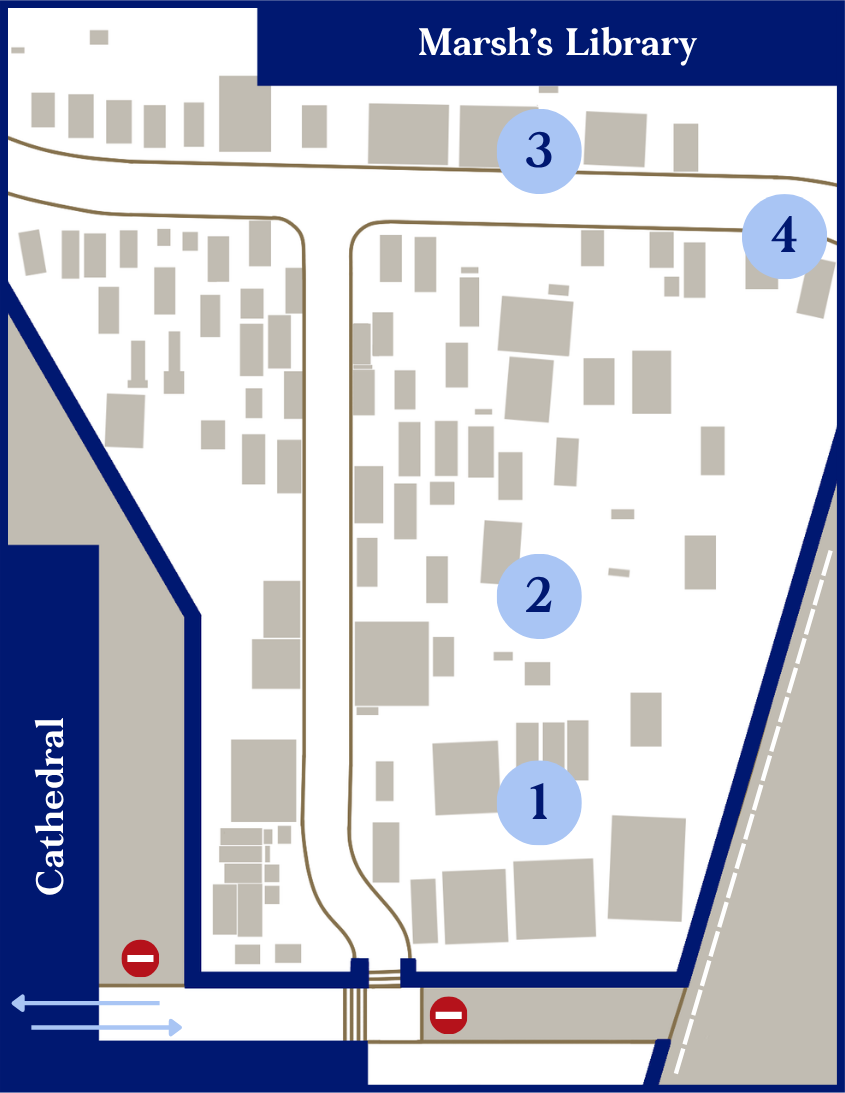
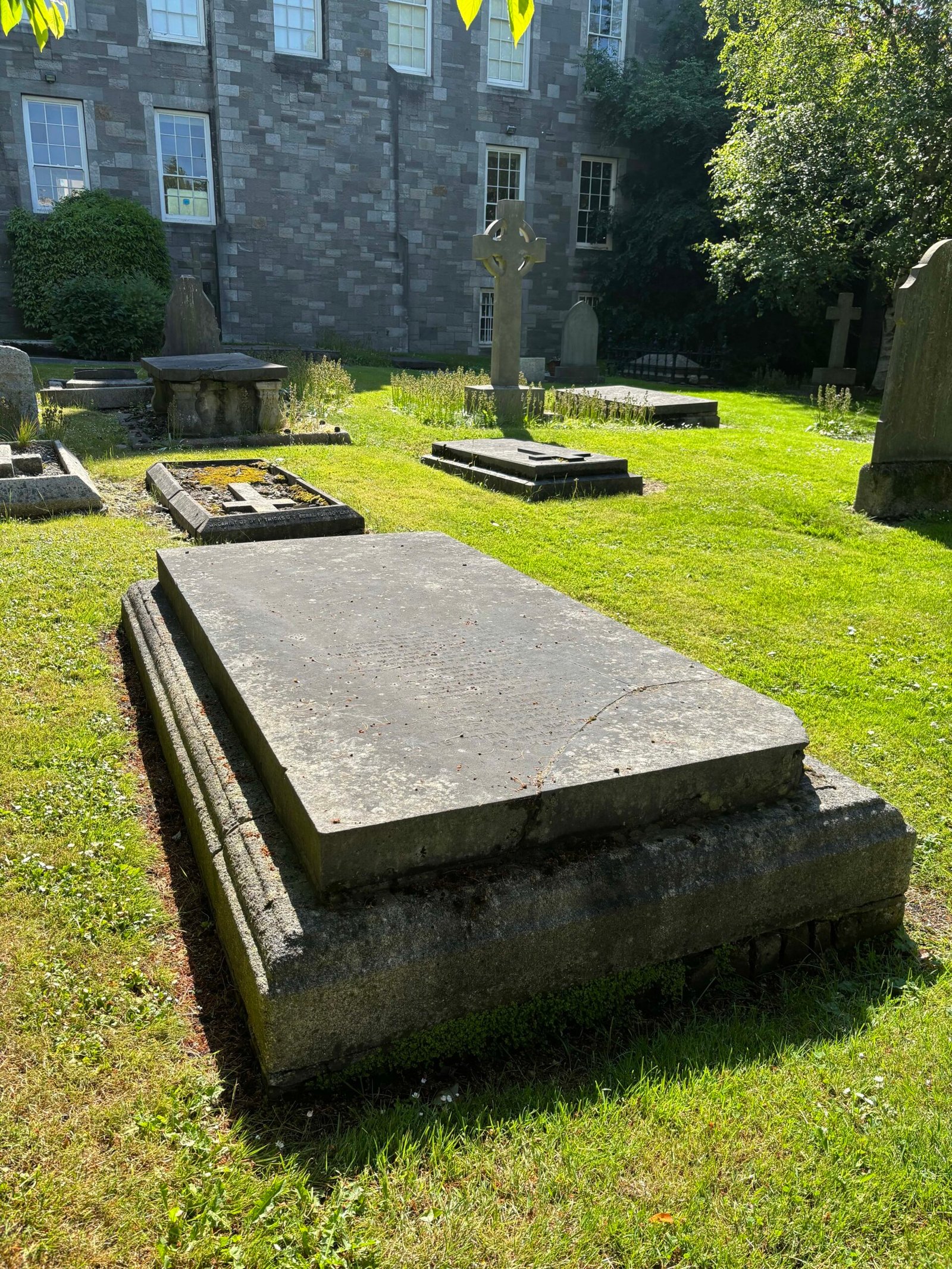
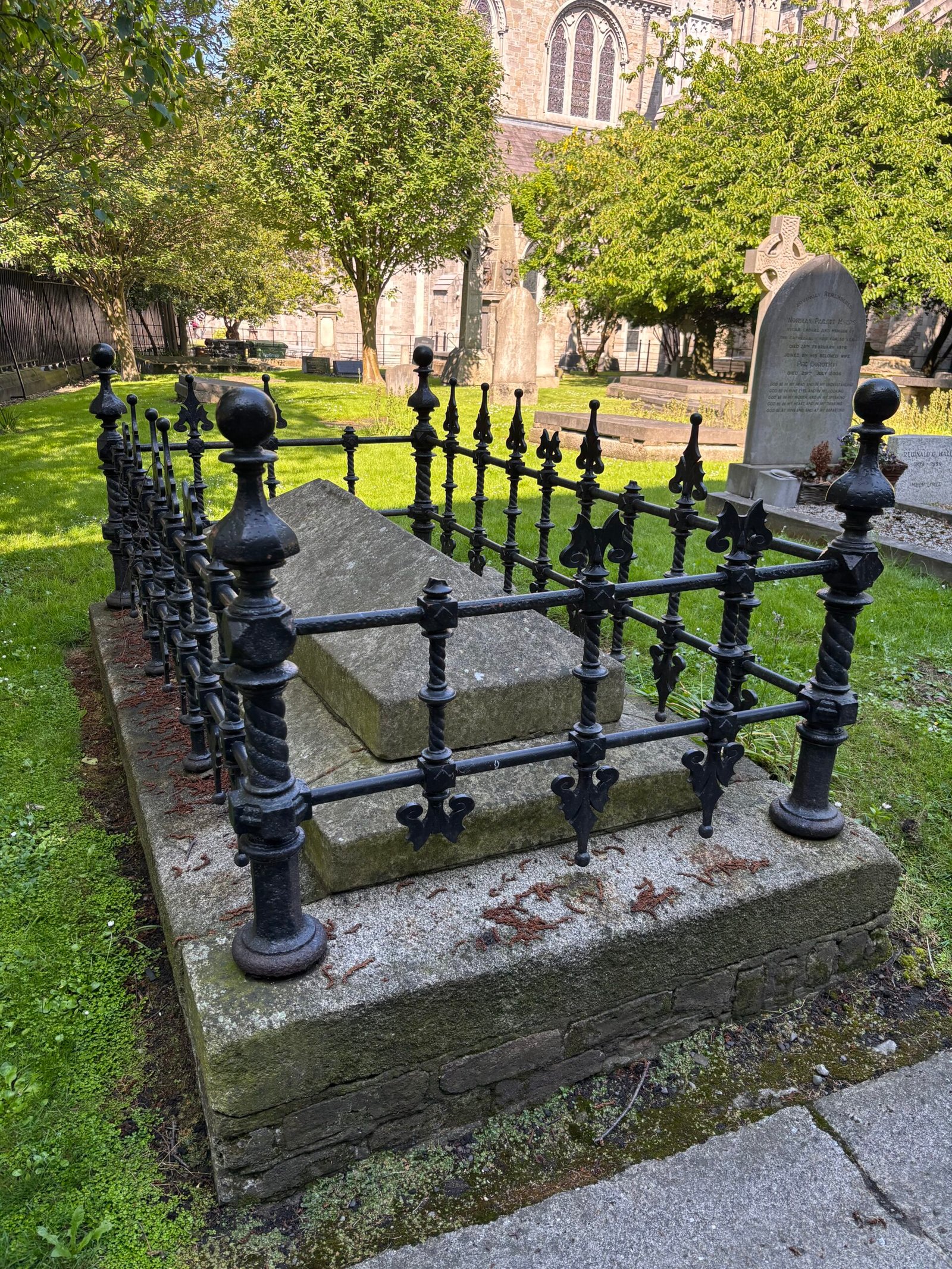
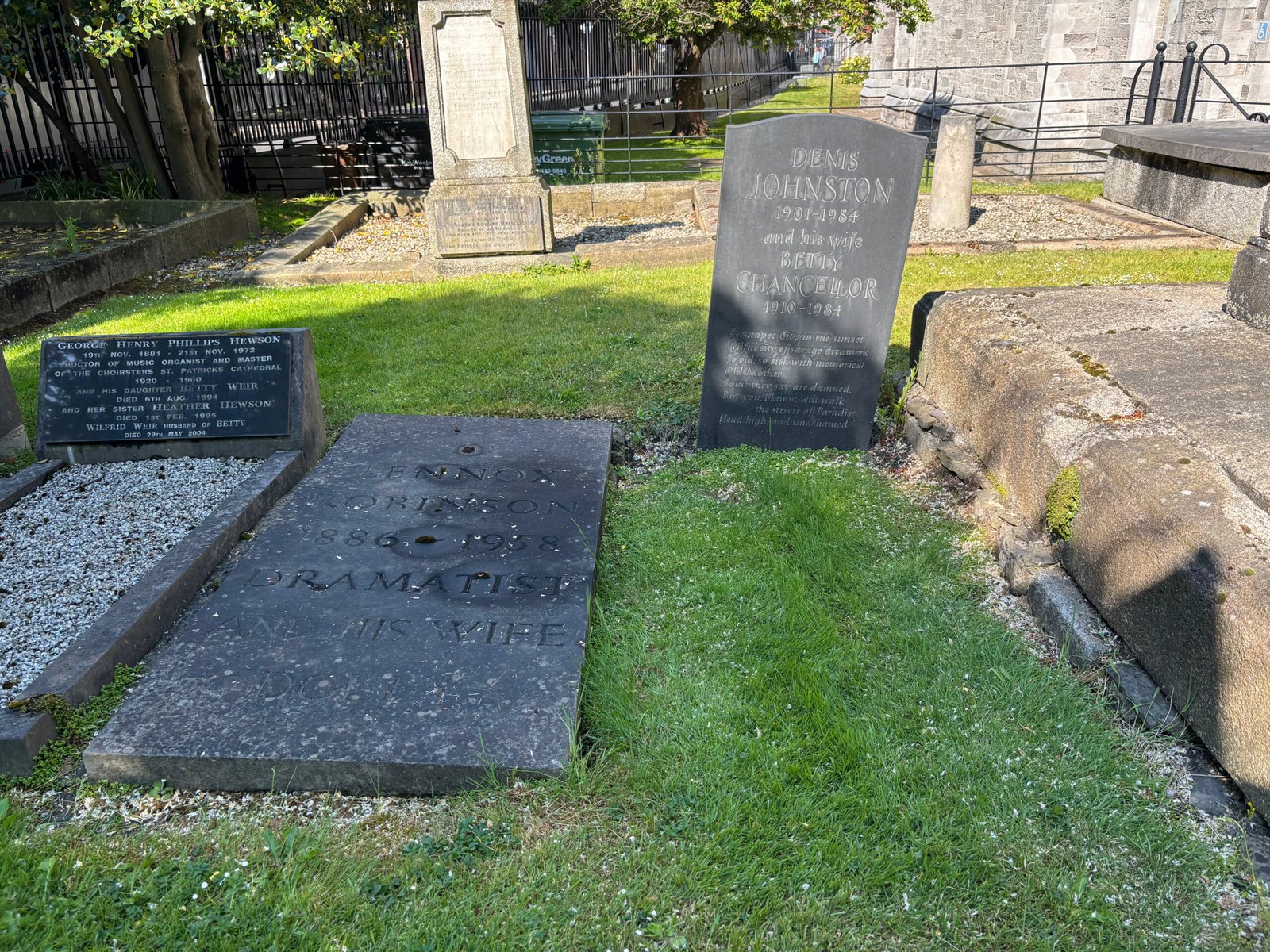 Two acclaimed Dublin dramatists are buried side by side here. During his long career at the Abbey Theatre as director and manager, Robinson was well-known for plays such as The Whiteheaded Boy (1916) and The Big House (1926). Johnston helped establish the reputation of the Gate Theatre through his 1929 production of The Old Lady Says ‘No!’.